

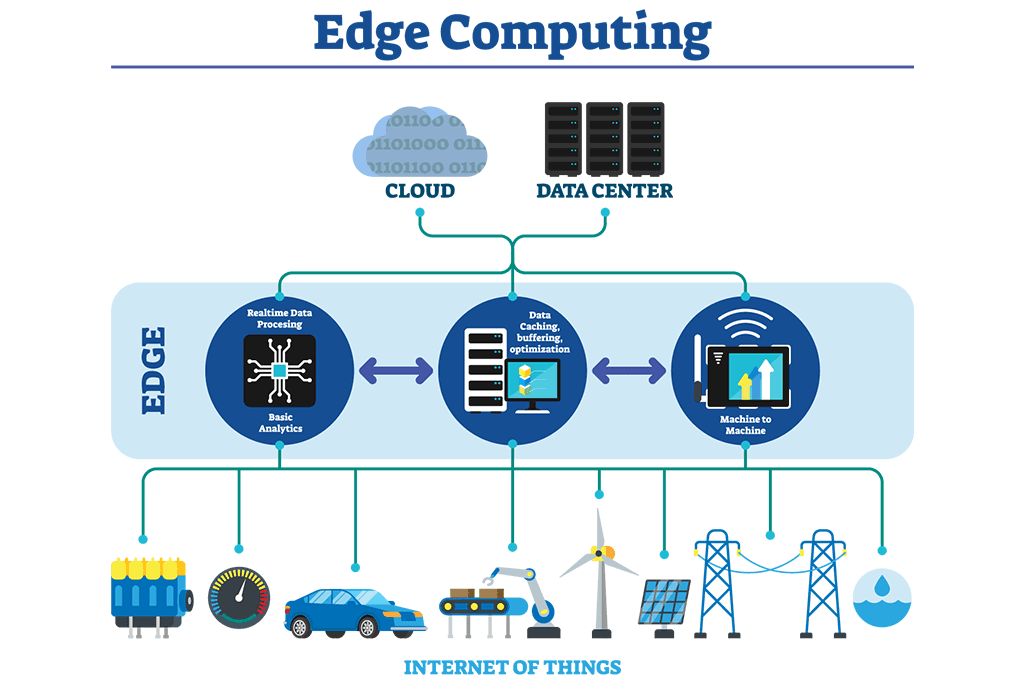
Edge computing has become a significant trend that complements digital transformation efforts. Gartner defines it as “a part of a distributed computing topology in which information processing is located close to the edge where things and people produce or consume that information.”
The core concept involves processing data near its generation point rather than in centralized datacenters. Modern implementation means cloud and edge computing coexist and interact in a smart and intelligent way. By positioning computation and storage closer to data sources, edge computing reduces latency issues, which proves critical for real-time analytics applications.
Use Cases: Edge computing emerged from exponential IoT growth and real-time analytics demands. Applications include autonomous vehicles, augmented/virtual reality, and AI-driven systems. Tesla and other major automakers, along with tech leaders like Apple, invest significantly in Edge AI. Cloud providers including AWS, Microsoft Azure, and Google Cloud Platform are extending services to the edge.
Challenges: Distributed edge systems face consistency and synchronization problems across nodes. Additionally, edge computers require sufficient computing power and appropriate power solutions to operate effectively.
Conclusion: Edge computing doesn’t replace cloud infrastructure; rather, it brings computing capabilities closer to data sources for latency-sensitive operations, offering benefits in speed, cost reduction, and security improvements.